
The Anti-Raid Test
A plain-language guide to making the PLWCF durable: stop raids, prevent budget substitution, and force transparency so the public can audit every dollar.

By the time a reader reaches the middle of this series, the questions change. Article 8 covers the people-and-community concerns: fairness, rural impacts, hunters and anglers, the outdoor industry, and political realism. This bonus post covers a different kind of question: trust.
When someone hears “new conservation fund,” they do not first ask what it could accomplish. They ask what could go wrong. If we build a large conservation funding mechanism, how do we keep it from becoming a slush fund, or a substitute for existing commitments, or a pot of money that can be frozen when politics change?
The answer is not a slogan. It is a set of design choices that make misuse harder and oversight easier. In other words, durability and accountability have to be built in on purpose.
Figure 1. The durability triangle
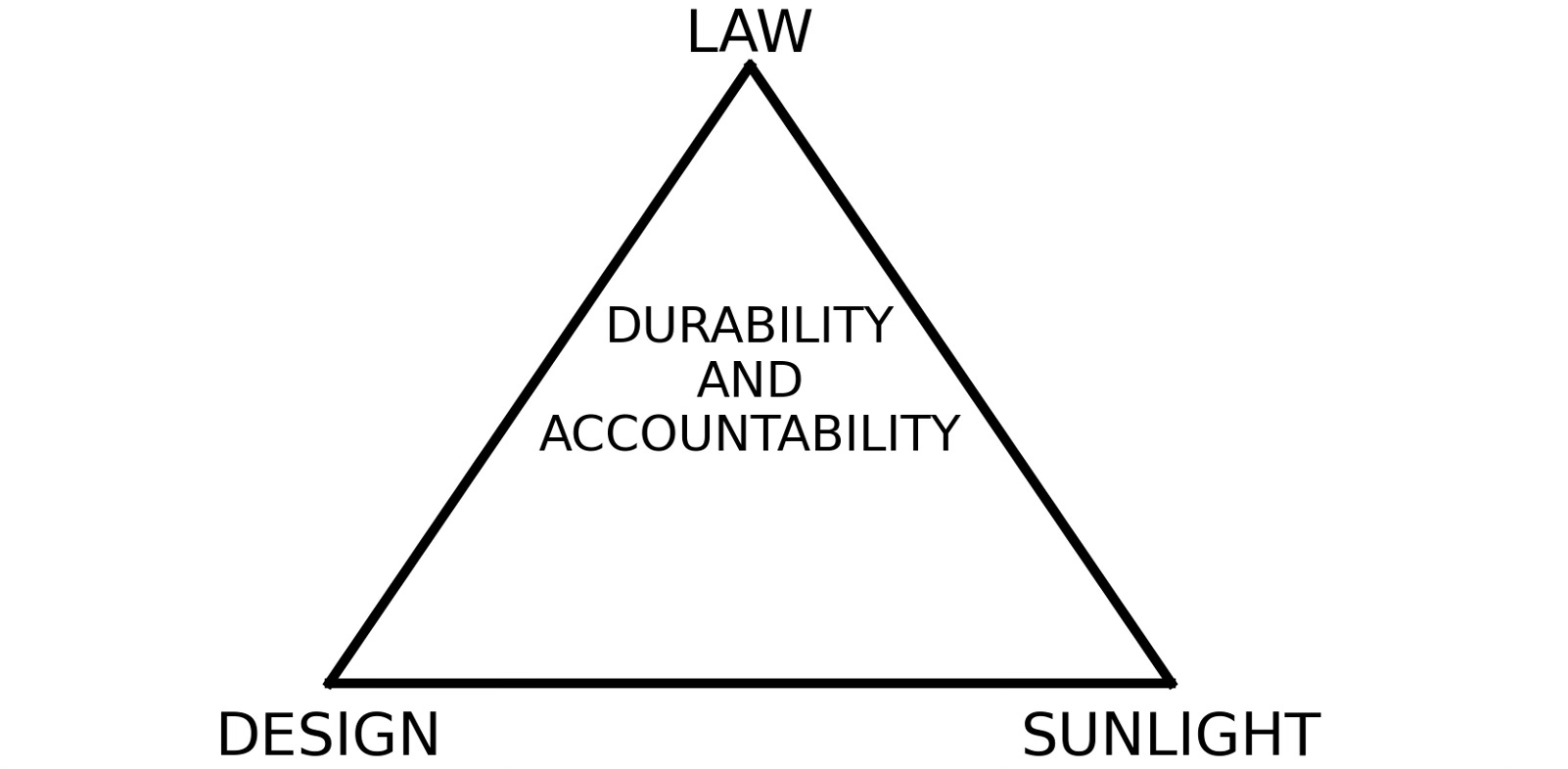
Figure 1. Durability and accountability are built in three places: law (purpose and restrictions), design (rules and incentives), and sunlight (public reporting and independent oversight).
Law: purpose limits and firewalls
The first line of defense is statutory clarity. A durable fund answers three questions in plain English: (1) what goes in (named revenue sources and deposit rules), (2) what it can be used for (eligible uses), and (3) what it cannot be used for (explicit exclusions that prevent mission drift).
If the statute is vague, everything else becomes discretionary. If the statute is narrow and explicit, diversion becomes harder to justify and easier to challenge. This is the lock on the door.
Design: stop quiet substitution and reward outcomes
The most common way a new fund fails is not a dramatic raid. It is quiet supplanting. New dollars appear, and someone reduces an existing line item because they assume the new fund will cover it.
A durable PLWCF design uses straightforward tools to reduce substitution risk: maintenance-of-effort rules where appropriate, clear separation of funding types (formula funding for stable baseline capacity, competitive funding for targeted outcomes), and consequences for misuse or noncompliance.
Sunlight: make oversight unavoidable
Transparency is the difference between a trust fund and a story. A durable model makes it possible for any skeptical reader to see deposits, allocations, recipients, project lists, and results without filing a records request.
Independent oversight should not rely on goodwill. It should be built into the system through standardized public reporting, audit hooks, and evaluation requirements. GAO’s work on conservation programs illustrates why traceable documentation matters when a program spans multiple recipients and purposes. [6]
The question everybody asks: can an administration freeze the money
It is a fair question. Congress controls spending, but the executive branch implements spending, and politics change. That is why the legal baseline matters.
The Impoundment Control Act of 1974 shapes the federal framework for withholding enacted funds through rescissions and deferrals, including reporting to Congress and oversight pathways that include GAO. [4] [5]
This does not mean conflict disappears. It means durability improves when a fund’s design makes withholding conspicuous, time-bound, and contestable through clear directives, obligation timelines, and public reporting.
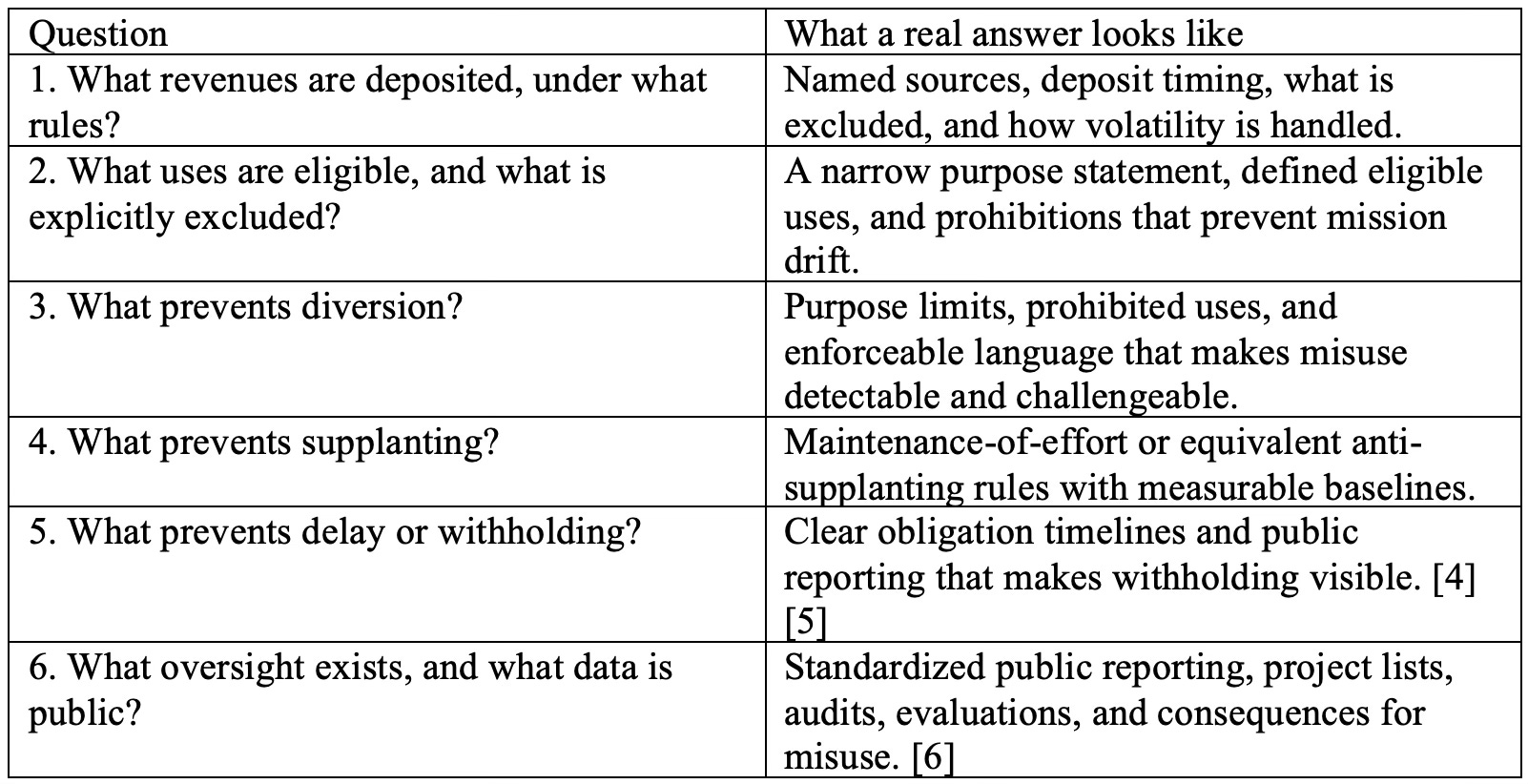
Table 1. The anti-raid pressure test
Table 1. Six questions that separate a durable funding model from a slogan.
If you support the goals of the PLWCF but distrust large public funds, you are not the problem. You are the accountability check. The real test is not whether we can design a fund. The test is whether we can design one the public can audit.
If you want the full blueprint, the project hub and working paper lay out the architecture. This bonus post is the durability standard you can use to keep the architecture honest.
Author’s note: This article is part of my Public Lands and Waters Conservation Fund project, which explores how we can build a modern, fair, and durable funding system for wildlife, habitat, and public access in the United States.
References
[1] U.S. Department of the Interior. “Land and Water Conservation Fund (LWCF).” Accessed January 2026. Link
[2] Great American Outdoors Act, Pub. L. 116-152 (August 4, 2020). Link
[3] Congressional Research Service. “The Great American Outdoors Act (P.L. 116-152)” (IF11636). Updated December 15, 2022. Link
[4] Congressional Research Service. “The Impoundment Control Act of 1974: Background and Legislative Considerations” (R48432). February 25, 2025. Link
[5] U.S. Government Accountability Office. “Impoundment Control Act.” Accessed January 2026. Link
[6] U.S. Government Accountability Office. Land and Water Conservation Fund: Variety of Programs Supported by LWCF and Process for Selecting Projects (GAO-19-346). May 31, 2019. Link